Orthotics
AFO Socks: Choosing Socks to Wear Under Your Brace
AFO socks sit between your skin and an ankle-foot orthosis, or AFO. Start with a smooth fit and enough length to cover the skin beneath the brace. Your sock, AFO and shoe need to be checked together.
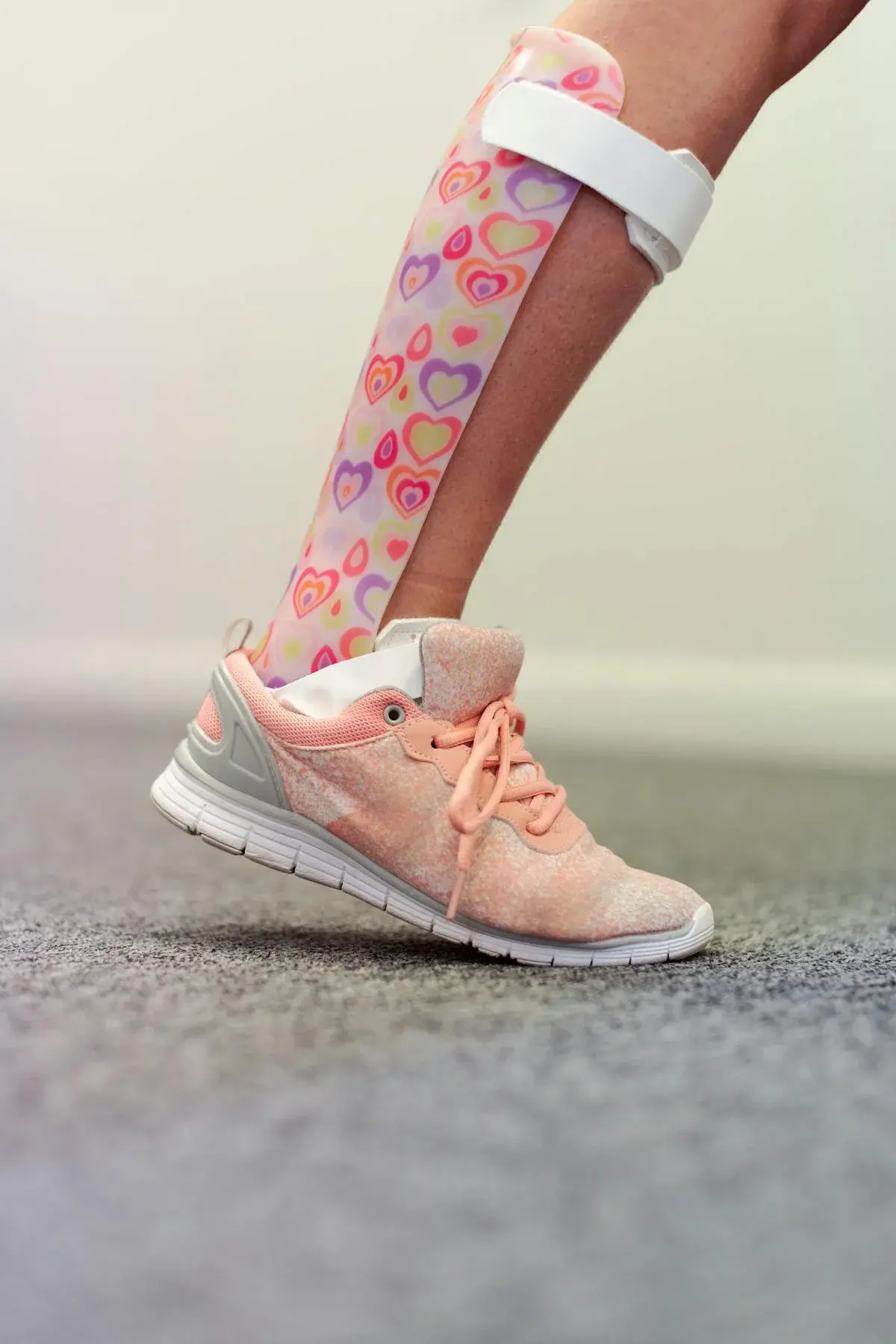
What to look for in AFO socks
- Length: cover the skin beneath the brace, including the calf section. A short ankle sock may leave the upper edge of the AFO against bare skin.
- A smooth surface: check for wrinkles, bulky seams and thick textured areas. Smooth the sock before fastening the brace.
- Fit: check the toes and the top band as well as the foot. Bring the sock to a fitting so its shape can be checked with the AFO in place.
- Material: ask about cotton or a moisture-wicking fabric that suits your skin and the device. There is no single material that every AFO wearer must buy.
Dedicated AFO socks come in different lengths and constructions. Some are seamless; others have a smooth toe seam. The product name alone does not tell you whether the size and shape suit your brace.
Check socks, brace and shoes together
Bring your usual socks and a spare pair to an appointment. Ask your orthotist to check the combination you plan to wear at home, school or work, rather than checking the brace on its own.
Follow the fitting instructions supplied with your AFO. Before fastening it, check that the sock has not gathered beneath your foot or around your ankle. For children, include the socks used with school shoes in the fitting check.
For footwear checks, read our guide to shoes for AFO braces. If you are new to the device, our AFO brace guide explains assessment and fitting.
Care and skin checks
Follow the washing and drying instructions on the sock label. Check that a washed sock still lies smoothly when you put it on. A spare pair can help when your usual socks are being washed or dried.
Check your skin when you remove the AFO, following your orthotist’s instructions. Stop using the brace and contact your orthotist if it causes pain, blisters, broken skin or marks that persist. Do not try to solve a pressure problem by adding padding or altering the brace yourself.
AFO socks and prosthetic socks are different
An AFO is a brace around your foot and lower leg. A prosthetic limb replaces a missing limb or part of a limb. Socks used with a prosthesis can have a different purpose, including helping manage socket fit.
If you are looking for socks used with a prosthetic leg, see our prosthetic socks guide. Use the sock type and fit recommended for your own device.
Questions to bring to your fitting
- Does this sock cover all the skin beneath my brace?
- Are the toe seam, top band and thickness suitable?
- What should I check when I remove the AFO?
- Who should I contact if the fit changes?
Frequently asked questions
Do I need special socks for an AFO?
A dedicated AFO sock is one option. What matters is that the sock fits smoothly, covers the skin beneath the brace and suits your fitted setup. Bring your usual socks to your orthotist to check.
How long should AFO socks be?
The sock should cover the skin beneath the brace. A short ankle sock may leave part of the lower leg uncovered. Check the length with the AFO on rather than choosing by shoe size alone.
Are AFO socks the same as prosthetic socks?
No. AFO socks are worn under an ankle-foot brace. Prosthetic socks are used with a prosthetic limb and may be prescribed in different thicknesses to manage socket fit. Ask your clinician for the type you need.

Ask about your AFO fit
Bring your brace, usual socks and shoes. Talk to Maegan about a fitting check at our Birtinya clinic or during a Sunshine Coast home visit.
Open 7 days, 9am to 7pm. Home visits across the Sunshine Coast or our Birtinya clinic.