What Is an AFO Brace? A Complete Guide to Ankle-Foot Orthoses

If you or someone you care about has been told they need an AFO brace, you probably have questions. What exactly is an ankle-foot orthosis? How does it work? And will it actually help? These are reasonable things to wonder, especially when the terminology feels unfamiliar and the options seem overwhelming.
An AFO brace -- short for ankle-foot orthosis -- is one of the most commonly prescribed orthotic devices in Australia. It is a supportive brace that fits around the ankle and foot, typically worn inside a shoe, to help control movement and improve stability during standing and walking. AFOs are used across a wide range of conditions, from stroke recovery and foot drop to cerebral palsy and multiple sclerosis.
This guide explains what an AFO brace is, how it works, who may benefit from one, and what to expect if you are considering an orthotic assessment. Whether you are researching for yourself, a family member, or a client, this information is designed to give you a clear foundation before speaking with a qualified orthotist.
Key Takeaways
- An AFO brace (ankle-foot orthosis) is a supportive device worn inside a shoe to control ankle and foot movement during walking
- AFOs may be prescribed for conditions including foot drop, stroke recovery, cerebral palsy, MS, and spinal cord injury
- Types range from solid ankle AFOs for maximum support to flexible posterior leaf spring designs for mild foot drop
- Both custom-made and prefabricated options are available depending on individual needs
- Funding may be available through NDIS, MASS, DVA, WorkCover or other funding bodies
What Is an AFO Brace and How Does It Work?
An AFO brace is a rigid or semi-rigid device that extends from just below the knee down to the foot. It usually wraps around the back or sides of the lower leg and underneath the foot, fitting inside a shoe. The device is designed to control the position and movement of the ankle joint during walking and standing.
In clinical terms, an ankle-foot orthosis works by applying external forces to the lower limb. Depending on the design, an AFO brace may prevent the foot from dropping during the swing phase of walking (the moment your foot lifts off the ground), stabilise the ankle to reduce rolling or twisting, assist with push-off during the late stance phase, or support correct alignment of the foot and ankle.
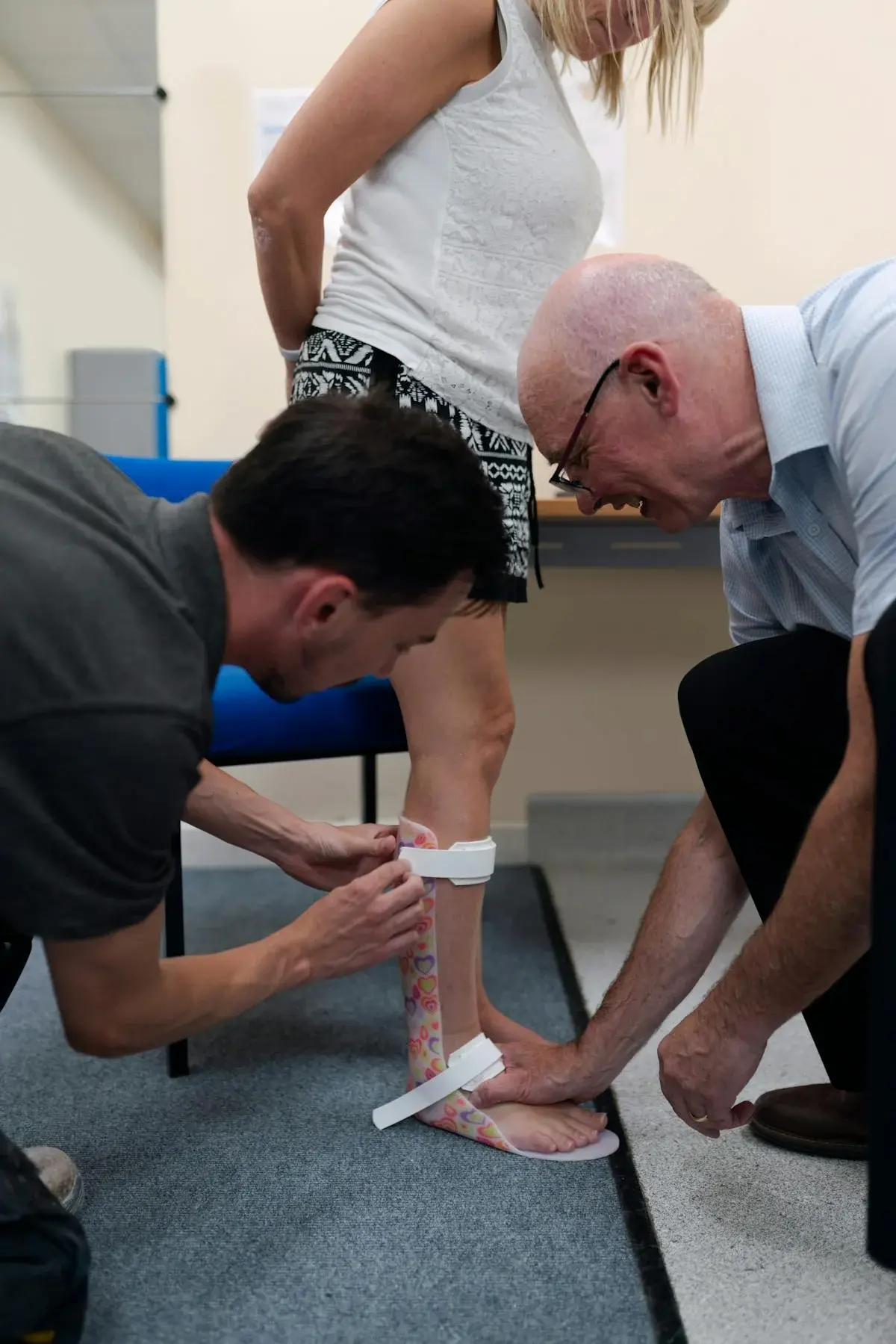
AFOs are prescribed and fitted by qualified orthotists -- allied health professionals who specialise in the design, fabrication, and fitting of orthotic devices. At practices such as Align Prosthetics, the process begins with a thorough biomechanical assessment to understand your individual needs before any device is recommended.
Important: An AFO brace is not a one-size-fits-all solution. There are many different types and configurations, each designed for specific conditions and functional goals. The right choice depends on an individual assessment by a qualified orthotist.
Common Conditions Where an AFO Brace May Be Suitable
AFO braces are used to manage a variety of neurological and musculoskeletal conditions that affect how the foot and ankle function. Below are some of the most common reasons an orthotist may recommend an ankle-foot orthosis.
Foot Drop
Foot drop is a condition where the muscles that lift the front of the foot are weakened or paralysed. This causes the foot to drag during walking, increasing the risk of tripping and falls. An AFO brace may help by holding the foot in a lifted position during the swing phase of gait. Foot drop can result from nerve injury, stroke, spinal conditions, or neurological disorders such as multiple sclerosis.
Stroke Recovery
Following a stroke, many people experience weakness or spasticity on one side of the body. An AFO brace may support ankle stability and foot clearance during walking, which can help reduce the energy required for movement. Research suggests that ankle-foot orthoses may improve walking speed and stride length in stroke survivors, though individual results vary depending on the severity and stage of recovery.
Cerebral Palsy
AFO braces are commonly prescribed for children and adults with cerebral palsy to manage spasticity, improve balance, and support more functional walking patterns. Paediatric AFOs require particular consideration for growth, compliance, and school or sporting activities. Regular reviews ensure the device continues to meet changing needs as the child develops.
Multiple Sclerosis (MS)
MS can cause progressive weakness in the lower limbs, including foot drop and reduced ankle control. An AFO brace may help maintain walking ability and reduce fatigue. Because MS symptoms can fluctuate and change over time, AFO prescriptions for MS often favour adjustable designs that can be adapted as needs evolve.
Peripheral Neuropathy
Conditions such as Charcot-Marie-Tooth disease and diabetic neuropathy can weaken the muscles of the foot and ankle, leading to instability and altered gait. An AFO brace may provide the external support needed to maintain a functional walking pattern and reduce falls risk.
Important: This is not an exhaustive list. AFO braces may be considered for many other conditions affecting the lower limb. A qualified orthotist can assess your specific situation and advise whether an ankle-foot orthosis may be appropriate for your needs.
The Main Types of AFO Braces
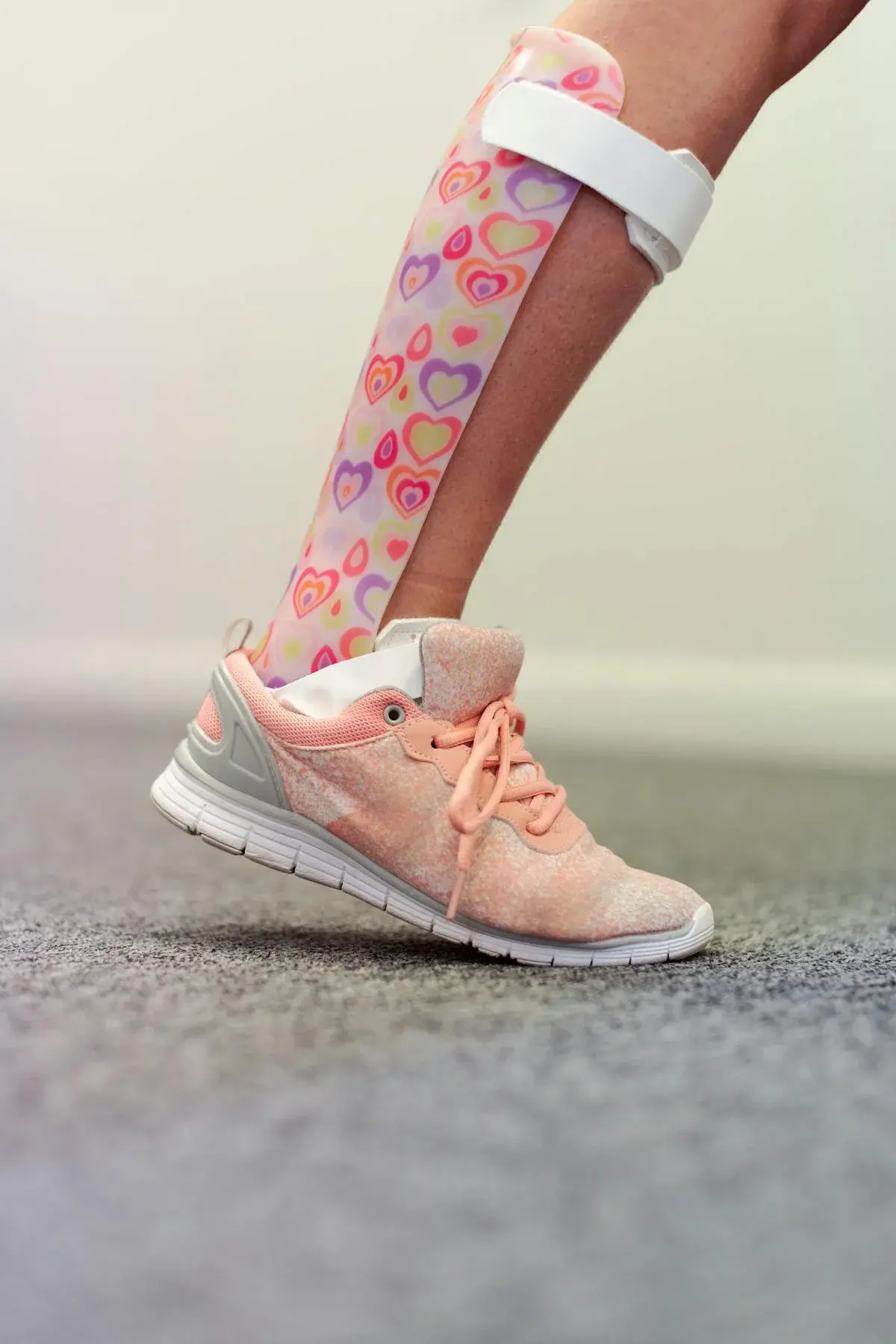
Not all AFO braces are the same. Different designs serve different purposes, and the type your orthotist recommends will depend on the condition being managed, your activity level, and your functional goals. Here is a brief overview of the most common types.
Solid Ankle AFO
Provides maximum support by holding the ankle in a fixed position. May be suitable for severe foot drop, significant ankle instability, or high muscle tone. Limits ankle movement, which can feel restrictive on stairs and slopes.
Hinged (Articulated) AFO
Incorporates ankle joints that allow controlled movement within a set range. May be suitable for people who have some ankle flexibility but need assistance with control. Offers a more natural walking pattern than solid designs.
Posterior Leaf Spring
A thin, flexible design that provides a spring-like action to lift the foot during walking. May be suitable for mild foot drop without significant spasticity. Low-profile and lightweight, making it easier to fit into a variety of footwear.
Ground Reaction AFO
Features a rigid front shell that helps stabilise the knee during standing and walking. Commonly used for conditions causing weakness of the calf muscles, which impairs balance, such as Charcot-Marie-Tooth disease.
Tip: For a detailed comparison of each AFO type, including benefits, trade-offs, and material options, read our comprehensive guide to AFO types.
Custom vs Prefabricated AFO Braces
AFO braces come in both custom-made and prefabricated (off-the-shelf) options. Each has a role depending on the individual's needs.
Custom AFO Braces:
Custom AFOs are fabricated from a mould or scan of the individual's limb. This ensures a precise fit and allows the orthotist to tailor the design to specific biomechanical requirements.
May be recommended when:
- •Significant deformities or asymmetries are present
- •The skin is sensitive or at risk of pressure injury
- •Complex biomechanical control is needed
- •Prefabricated options do not fit adequately
Prefabricated AFO Braces:
Prefabricated AFOs are manufactured in standard sizes and can often be fitted sooner than custom devices. Modern prefabricated designs have improved significantly and may suit many straightforward presentations.
May be recommended when:
- •Support needs are straightforward
- •A quicker turnaround is needed
- •Budget considerations are a factor
- •The condition is temporary or expected to change
Your orthotist can advise whether a custom or prefabricated AFO brace is more appropriate after completing an assessment. Both options can be effective when properly fitted by a qualified professional.
What to Expect During an AFO Brace Fitting
If you have been referred for an AFO brace, understanding the process can help ease any uncertainty. While every practice operates slightly differently, the general steps are consistent across most orthotic providers in Australia.
Step 1: Initial Assessment
Your orthotist will assess your walking pattern, muscle strength, joint range of motion, and overall functional needs. They will discuss your daily activities, goals, and any concerns you may have. This assessment forms the basis for recommending the most appropriate AFO type.
Step 2: Measurement and Moulding
For custom AFOs, the orthotist will take a mould or 3D scan of your lower limb. Some practices, including Align Prosthetics, use digital scanning technology for a precise and comfortable capture. For prefabricated AFOs, measurements ensure the correct size is selected.
Step 3: Fitting Appointment
Once the AFO is fabricated (typically 3-4 weeks for custom devices), you will return for a fitting. Your orthotist will check the fit, alignment, and comfort, and make adjustments as needed. You will practise walking with the device so the orthotist can assess how it performs.
Step 4: Follow-Up and Adjustments
A follow-up appointment is standard to review how you are going with the device. Minor modifications are common and expected -- it is part of the process of optimising fit and function. Ongoing reviews ensure the AFO continues to meet your needs as circumstances change.
Funding Your AFO Brace in Australia
Funding is one of the most common questions people have about AFO braces. Several pathways may be available depending on your circumstances.
- NDIS -- For eligible participants, AFO braces may be funded under Assistive Technology. Coverage can include the device, fitting, adjustments, and replacements.
- MASS (Queensland) -- The Medical Aids Subsidy Scheme provides funding for eligible Queensland residents requiring prosthetic and orthotic devices.
- DVA -- The Department of Veterans' Affairs covers orthotic devices for eligible veterans and their dependants.
- WorkCover / NIISQ -- May apply for injuries sustained at work or through motor vehicle accidents.
- Private health insurance -- Some policies cover orthotic devices. Check with your provider for specific entitlements.
For a detailed breakdown of funding pathways, eligibility criteria, and application support, read our comprehensive prosthetic and orthotic funding guide. Your orthotist can also assist with documentation and funding applications as part of the assessment process.
Caring for Your AFO Brace
Proper care helps maintain the function and longevity of your AFO brace. Your orthotist will provide specific instructions, but here are some general guidelines.
Daily Care:
- •Wipe the AFO with a damp cloth daily to remove perspiration
- •Allow the device to air dry completely before wearing
- •Check the skin underneath for any redness or pressure marks
- •Wear a cotton sock under the AFO for comfort and hygiene
When to See Your Orthotist:
- •Persistent redness or skin breakdown from the device
- •Cracks, warping, or visible damage to the AFO
- •Changes in your condition or functional needs
- •Discomfort that does not resolve with the break-in period
Disclaimer: Individual results vary. This information is educational and does not replace professional medical advice. AFO prescription requires assessment by a qualified orthotist. Consult with a qualified orthotist or prosthetist to discuss your specific needs.
Frequently Asked Questions About AFO Braces
What is an AFO brace used for?▼
An AFO brace (ankle-foot orthosis) is used to support the ankle and foot. It may be prescribed for conditions such as foot drop, stroke-related weakness, cerebral palsy, multiple sclerosis, and spinal cord injury. AFOs help control ankle position, improve walking stability, and reduce the energy needed for movement. Individual needs vary, so consult a qualified orthotist to discuss whether an AFO may be suitable for your situation.
How does an AFO brace work?▼
An AFO brace works by controlling the position and movement of the ankle and foot during standing and walking. It typically extends from below the knee to the foot, fitting inside a shoe. Depending on the design, an AFO may prevent the foot from dropping during walking, provide stability to a weak ankle, assist with push-off during the gait cycle, or support proper alignment. The specific mechanism varies by AFO type and individual prescription.
What does AFO stand for in medical terms?▼
AFO stands for Ankle-Foot Orthosis. It is a type of orthotic device that encompasses the ankle and foot. In clinical settings, you may also hear it referred to as an ankle-foot brace, foot drop brace, or lower limb orthosis. AFOs are one of the most commonly prescribed orthotic devices in Australia and are fitted by qualified orthotists.
Can I wear an AFO brace with normal shoes?▼
Most AFO braces are designed to fit inside footwear, though you may need shoes with a little extra depth or width to accommodate the device comfortably. Lace-up shoes or those with velcro straps tend to work well. Some low-profile AFO designs fit into a wider range of shoe styles. Your orthotist can advise on appropriate footwear during the fitting process. If specialist footwear is required, it may be included in your funding application.
How long does it take to get used to wearing an AFO brace?▼
Adjustment periods vary from person to person. Most people begin to feel more comfortable within one to two weeks of regular wear. Your orthotist will typically recommend a gradual break-in period, starting with a few hours per day and increasing over time. Follow-up appointments allow your orthotist to make adjustments to improve comfort and function. Individual results vary depending on the condition being managed and the type of AFO prescribed.
Does the NDIS cover AFO braces in Australia?▼
AFO braces may be funded through the NDIS under the Assistive Technology category for eligible participants. Funding can cover custom fabrication, fitting appointments, adjustments, and replacements. A detailed report from your orthotist outlining functional needs and device justification supports the application. Other funding pathways such as MASS (Queensland), DVA, and WorkCover may also apply depending on your circumstances. Read our funding guide for more detail.
What is the difference between an AFO brace and a regular ankle brace?▼
A regular ankle brace typically provides compression and mild support for sprains or ligament injuries. An AFO brace is a more structured orthotic device that controls ankle and foot position during walking. AFOs are prescribed for neurological or musculoskeletal conditions that affect how the foot and ankle function, such as foot drop, stroke-related weakness, or cerebral palsy. AFOs are custom-fitted or professionally selected by a qualified orthotist, whereas standard ankle braces are generally available over the counter.
Are there different types of AFO braces?▼
Yes, there are several types of AFO braces designed for different needs. Common types include solid ankle AFOs for maximum support, hinged AFOs that allow controlled ankle movement, posterior leaf spring AFOs for mild foot drop, and ground reaction AFOs for improved knee stability. Materials range from polypropylene (plastic) to lightweight carbon fibre. The type prescribed depends on your specific condition, activity level, and functional goals. Read our detailed guide to AFO types for a comprehensive comparison.
Align Prosthetics provides comprehensive orthotic assessments, AFO brace fitting, and ongoing support throughout the Sunshine Coast region. We work with the NDIS, MASS, DVA, and other funding bodies to support your application, and collaborate with your treatment team to help achieve your goals.
Book Your Assessment