Prosthetics
Showering and Swimming with a Prosthetic Leg

By Maegan Morrison, AOPA Certified prosthetist and orthotistUpdated
You can shower or swim wearing a prosthetic leg only if the fitted system is approved for that use. Water resistance varies between models and components. Rain, a shower, a chlorinated pool and the sea are different exposures. Check the instructions for your exact leg with your prosthetist before taking it into water.
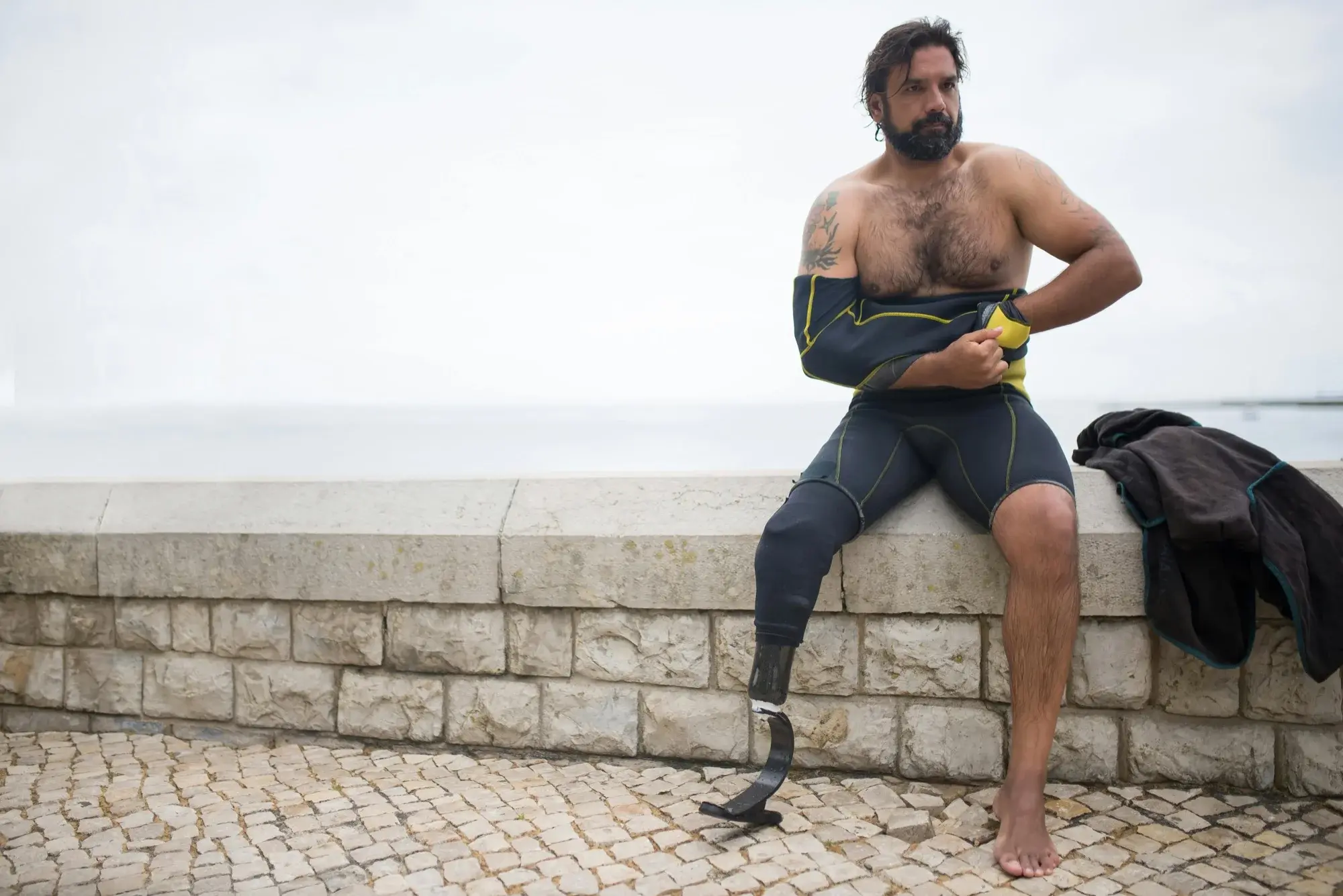
Check the Whole Leg, Not Just the Foot
A leg prosthesis includes more than the visible foot or knee. The socket, suspension, connectors, cosmetic cover, foot shell and any electronics must be considered together. Approval for one component does not automatically cover the assembled leg.
Some systems are built for water use. Others tolerate only particular contact with water, and some must be kept dry. Your everyday prosthesis should not be assumed to be a shower or swimming leg.
Ask your prosthetist to identify the models and the instructions that apply. The exact version matters, particularly for electronic components. A description of a newer product in the same range may not apply to your fitted one.
If the information is uncertain, keep the prosthesis out of the water until it has been checked. A bag or generic protective cover does not change the manufacturer’s permitted use. Ask whether a proposed cover is suitable for the complete system and activity.
What Water-Resistant and Waterproof Mean
Manufacturer terms have specific limits. Water-resistant may describe contact such as rain or splashes. Waterproof may permit immersion, but the allowed depth, duration, water type and cleaning routine still depend on the component.
An IP rating is an ingress protection rating: it describes protection against entry of things such as dust and water under specified conditions. It is useful information, but it does not by itself explain every restriction for a prosthetic leg.
Read the manufacturer’s instructions alongside the rating. Ask about soap, shower jets, salt, chlorine, heat and sand. A device that permits fresh-water exposure may have different restrictions for a pool or the sea.
Manufacturers also distinguish the protection of electronics from the tolerance of mechanical parts. The assembled prosthesis must be assessed for the planned use, rather than relying on a single label.
Plan Showering Around Access and Stability
Showering involves moving on wet surfaces, entering and leaving the shower, and managing the limb and equipment. A water-suitable prosthesis does not remove the need for a safe bathroom routine.
An occupational therapist can assess the bathroom and discuss transfers, seating, rails and other equipment. Your rehabilitation team can help you work out whether you shower with a suitable prosthesis, without it, or with another form of support.
- How will I enter and leave the shower?
- What support or seating has been assessed for me?
- Where can I keep the prosthesis and walking aids dry when they are not used?
- Can I reach the controls and manage washing without an unsafe transfer?
- How will I dry the limb and check the skin before dressing?
Use the routine you have been taught. Do not improvise a standing or hopping method on a wet floor simply because the everyday leg must be removed. Tell the team if your bathroom setup makes the agreed routine difficult.
Pools, Beaches and Swimming
Swimming includes several tasks: getting to the water, entering it, moving in it and getting out. Discuss each part. A prosthesis suitable for walking at a pool is not automatically an appropriate swimming device for every activity.
Confirm whether fresh, chlorinated or salt water is permitted for the fitted components. Ask about the maximum exposure, whether sand is allowed and how to care for the system afterwards. Instructions can differ even within a manufacturer’s waterproof range.
For a beach visit, explain whether you plan to cross dry sand, walk in shallow water or swim. Those activities place different demands on the prosthesis and on your balance. Your team can discuss the equipment and assistance appropriate to the plan.
If you are considering a separate water or activity-specific prosthesis, ask what need it would address and how it would be fitted. A second leg requires its own assessment, training and funding discussion; it is not automatically included with an everyday leg.
You may prefer to swim without a prosthesis. Ask your rehabilitation team how to manage access and transfers safely for that choice too.
Cleaning and Drying After Permitted Water Use
Follow the instructions for the specific components. For water-approved products, the manufacturer may require fresh-water rinsing after salt or chlorinated water and a particular drying method. Do not apply one product’s routine to a part that should not be immersed.
The liner, sleeve and socket need attention as well. Moisture may affect the interface and suspension. Ask how to clean and dry each part, when to reassemble the system and what to inspect before putting it on again.
Keep a copy of the care instructions, especially when travelling. Ask the prosthetist about any accessible areas that need checking for trapped water, sand or debris. Do not dismantle structural connections yourself.
If the device has been exposed outside its permitted conditions, contact the provider for advice. Unexpected noise, unreliable movement, damaged parts or a change in function needs an inspection. Do not continue using a leg that feels unsafe.
Check your skin before returning to your normal wear routine. Follow any wound-care restrictions given by your treating team, regardless of the prosthesis’s water rating.
Questions to Ask Before Water Use
- Which components and exact versions are fitted to my leg?
- Is the assembled system approved for showers, pools or salt water?
- What depth, time, temperature or water-pressure limits apply?
- Are soap, chlorine, sand and cosmetic covers covered by the instructions?
- What rinsing, drying and inspection steps are required?
- What transfers, seating or assistance do I need for this activity?
- Who should I call if water exposure or a fault occurs?
Bring the activity you want to do into the assessment. “I want to shower at home” gives the team a different question from “I want to swim at the beach”. A clear goal helps separate device selection from access and training needs.
See Align’s prosthetic services to discuss your fitted system, and the repair and replacement guide if it has been damaged. The funding guide explains how an assessed need and a quote are considered.
Frequently Asked Questions
Can I shower with my normal prosthetic leg?
Only if the complete fitted system is approved for shower use. Ask your prosthetist to check the exact component instructions, including restrictions on water type, soap, temperature and exposure.
Does waterproof mean I can swim in the sea?
Not automatically. The permitted water type, depth, duration and care routine vary by product. Confirm salt-water use for the whole fitted prosthesis before entering the sea.
Can I protect a non-waterproof leg with a cover?
Do not assume a cover makes a leg suitable for water. Ask whether the specific cover and complete system are approved for the activity. A generic bag does not change the component’s permitted use.
Related Guides and Services
Sources
Clinical guidance and manufacturer information checked on 10 October 2026. Your own fitting plan and the instructions for your device take priority.
About the author
Maegan Morrison
Maegan is an AOPA Certified prosthetist and orthotist on the Sunshine Coast. She runs Align Prosthetics and sees every client herself, at home or at the Birtinya clinic.
About MaeganCheck Your Leg Before Water Use
Tell Maegan whether you want to shower, use a pool or visit the beach. She can help check the fitted components and discuss the assessment needed.
Open 7 days, 9am to 7pm. Home visits across the Sunshine Coast or our Birtinya clinic.