Prosthetics
Your First Above-Knee Prosthesis: Fitting, Knee Options and What to Expect
An above-knee prosthesis replaces the leg above the knee, so the socket, knee and foot must work together. Your first fitting is a process of assessment, trial, adjustment and rehabilitation. Here is how to prepare and what to ask.
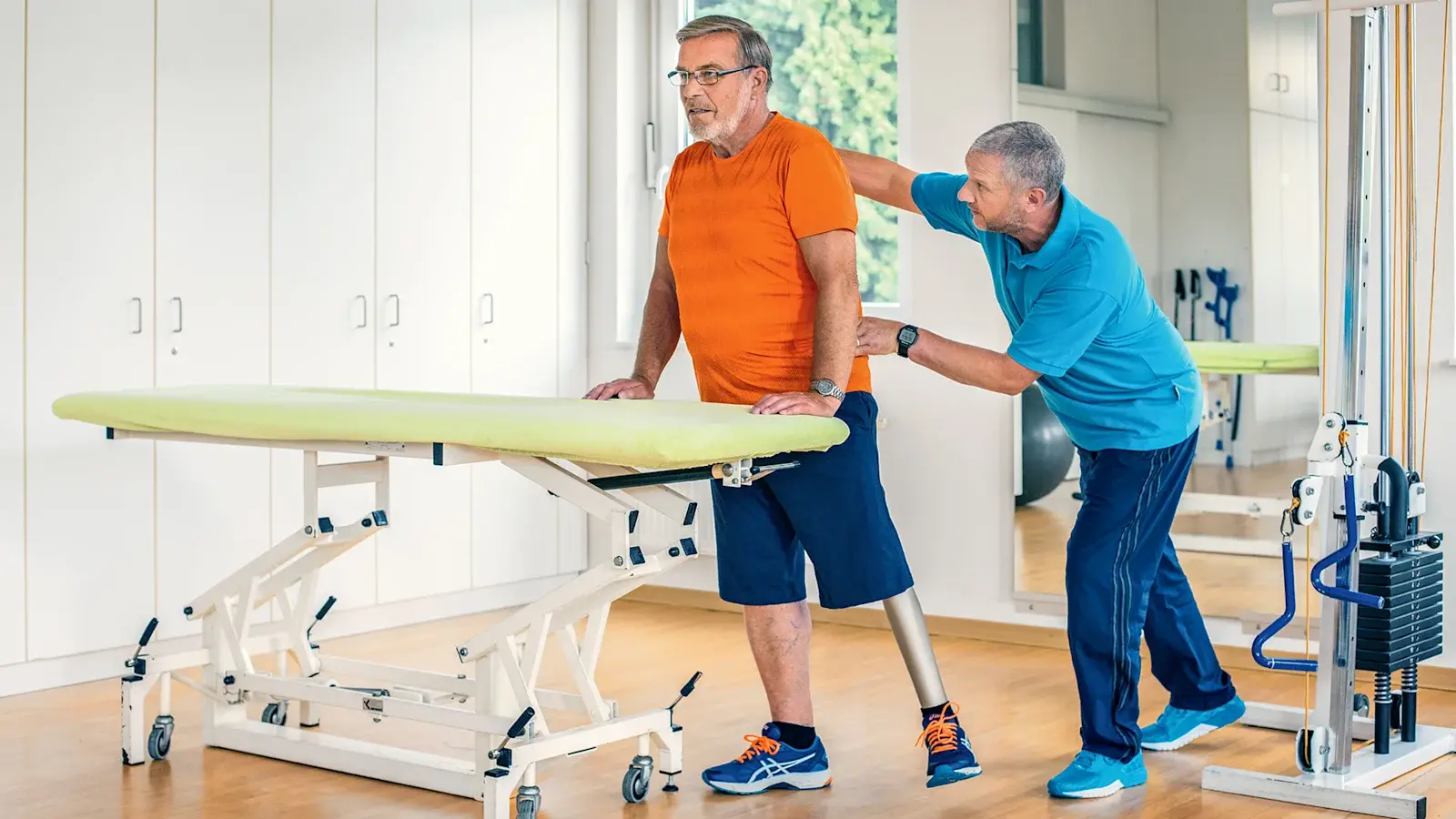
Assessment Starts With Your Goals
Your prosthetist reviews your residual limb, skin, strength, movement, balance and current mobility. They also ask about home, work, transport and recreation. These details help guide the socket, suspension and knee discussion.
Tell the team what you want the prosthesis to help you do. Walking across a room, managing stairs, standing at work and moving outdoors may call for different priorities. Bring your physiotherapist or support person if that helps you explain your needs.
- Describe pain, skin changes, swelling and any current walking aids.
- Explain the surfaces, distances and stairs you use.
- Ask how fitting will work with physiotherapy and rehabilitation.
The Socket and Check Socket
The socket is the part that holds your residual limb. The prosthetist may take measurements, make a cast or use a scan. A temporary check socket can show pressure, contact and suspension before the final socket is made.
An above-knee socket must support you while allowing the hip to move. Tell the prosthetist where you feel pressure, rubbing, pulling or movement. You do not need to know the clinical term. The detail helps guide the next adjustment.
Choosing and Checking the Knee
An above-knee prosthesis needs a knee joint as well as a foot. The choice depends on your stability, strength, walking pattern, goals, environment and ability to manage the component. A more complex knee is not automatically the right choice.
Ask what the proposed knee is designed to do, what training it requires and how it is maintained. Ask how it behaves when you sit, stand, turn, use stairs or walk on uneven ground. A trial or demonstration may help you and the team assess whether it suits your needs.
Our above-knee prosthetics service page explains the assessment pathway. The mechanical and microprocessor knee guide covers questions for a component trial.
Alignment, Training and Follow-Up
Alignment is the position of the socket, knee and foot in relation to one another. The prosthetist may adjust it while watching you stand and walk. Bring the shoes you use most often because heel height changes the setup.
You may practise putting the prosthesis on and taking it off, sitting, standing and walking with support. Rehabilitation continues after the fitting. A physiotherapist can work on strength, balance, transfers and safe walking with the prosthesis.
Your residual limb and activity may change. Keep follow-up appointments and contact the team if the socket becomes painful, loose or difficult to use. Do not alter alignment or components yourself.
What to Bring
- Loose clothing that allows access to your limb.
- Your usual shoes and any walking aids.
- Your current prosthesis, liner and socks if you have them.
- Referral, medical and funding information.
- A list of goals, symptoms and questions.
Align’s first appointment guide explains what to expect when you discuss assessment, funding and fitting.
Frequently Asked Questions
What happens at an above-knee prosthetic fitting?
The team reviews your goals and limb, checks the socket and suspension, assesses alignment and watches how you move. A check socket or further adjustments may be part of the process.
Will I get my final above-knee prosthesis at my first appointment?
Not usually. Assessment, casting or scanning, trial fitting, component selection and rehabilitation may happen across several visits. Your prosthetist will explain the next step for your situation.
Which shoes should I bring to an above-knee fitting?
Bring the shoes you expect to wear most often. Heel height and shoe shape affect alignment, so discuss any different footwear before using it with the prosthesis.
Related Guides and Services
Prepare for Your First Above-Knee Fitting
Speak with Maegan about your goals, your stage of recovery and the next step in fitting an above-knee prosthesis.
Open 7 days, 9am to 7pm. Home visits across the Sunshine Coast or our Birtinya clinic.