Plagiocephaly and Cranial Helmet Therapy: A Parent's Guide to Flat Head in Babies
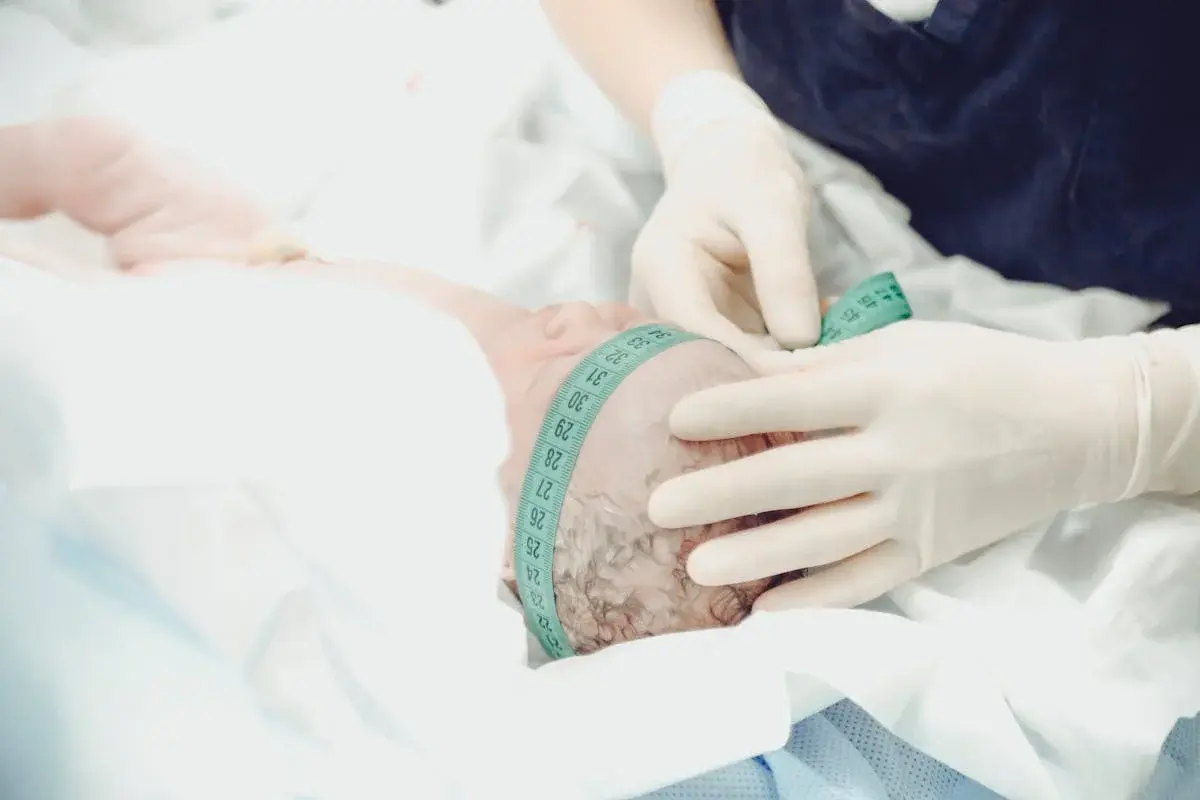
Noticing that your baby's head looks a little uneven or flat can feel worrying. You may have started Googling at 2am and found a confusing mix of reassurance and alarming forum posts. That reaction is understandable -- and you are far from alone.
Plagiocephaly, the medical term for a flattened or asymmetrical head shape in infants, is one of the most common conditions seen at child health appointments in Australia. Studies suggest that up to 40--50% of Australian babies develop some degree of head flattening in the early months of life. For the vast majority, the condition is positional -- meaning it develops because of the way a baby rests their head, not from any problem with brain development or skull structure. Deformational head flattening does not affect how your baby's brain grows or functions.
This guide covers what plagiocephaly is, how clinicians grade its severity, what repositioning strategies work, when a cranial helmet may be worth considering, the realistic side effects most Australian websites skip over, and what treatment costs in Australia. It draws on a 2025 Sunshine Coast Health clinical guideline and current national evidence.
Key Takeaways
- Plagiocephaly affects an estimated 40--50% of Australian babies to some degree and does not affect brain development
- Conservative repositioning is effective in the first 6 months and is always the first step in management
- Never use pillows or positioning wedges during sleep -- they are contraindicated by Red Nose Australia due to SIDS risk
- Cranial helmet therapy may be considered for moderate-to-severe cases not improving with conservative care; the optimal fitting window is 4--7 months
- An assessment carries no obligation to proceed -- it is a decision-making tool that helps families weigh treatment options, and many assessments do not lead to helmet therapy
- Total private costs in Australia are typically $2,800--$3,800; Medicare does not cover the helmet itself
What Is Plagiocephaly? Definitions in Plain Language
Plagiocephaly is a general term for a misshapen or asymmetrical infant head. There are several distinct types.
Plagiocephaly (positional) refers to flattening on one side of the back of the head. Consistent pressure on one area causes that region to flatten while the opposite side rounds outward, creating a "parallelogram" shape when viewed from above. On the same side as the flattening, the ear is typically pushed forward and the forehead may be slightly more prominent (bossing).
Brachycephaly describes symmetrical flattening across the entire back of the head, giving a wider and shorter overall shape. It develops when babies consistently lie facing straight upwards.
Asymmetrical brachycephaly combines both -- broad flattening across the back but more pronounced on one side.
Head flattening most commonly develops between 4 and 8 weeks after birth, when babies lack the head control to shift their own position. Because back-sleeping is the single most effective protection against SIDS and is firmly recommended by Red Nose Australia, most babies spend significant time on their backs -- which is the right decision. The rise in plagiocephaly prevalence over the past three decades is a direct consequence of the Back-to-Sleep campaign's success. Head flattening that sometimes follows is a manageable, cosmetic consequence. Other contributing factors include a preferred head position established in the womb, neck muscle tightness (torticollis), and prematurity.
How Clinicians Grade Plagiocephaly Severity
When a child health nurse or clinician assesses your baby's head shape, they grade five specific features to guide management. Understanding this framework helps you interpret what they find.
The five assessment areas are: posterior (back) head flattening; ear malalignment; forehead asymmetry; neck involvement with visible head tilt in sitting; and facial asymmetry. Each area is given a score from 0 (none) to 3 (severe), which combine into a total severity score out of 15. The total guides how the condition is managed -- from simple repositioning education through to a referral for orthotic assessment.
In addition to this clinical grading, orthotists use objective measurements to quantify head shape precisely. The two most commonly used are the Cranial Vault Asymmetry Index (CVAI), which measures the diagonal difference across the skull and indicates how lopsided the head is, and the Cephalic Ratio (CR), which compares head width to length and indicates how flat or wide the back of the head has become. These measurements are typically captured using 3D scanning and provide the most reliable way to track change over time.
Mild scores indicate features that can be managed by the child health nurse with one or two visits for repositioning education and reassurance.
Moderate scores indicate noticeable flattening, early ear shift, or some forehead asymmetry, but without significant neck involvement. These infants need two to three monitoring visits and consistent repositioning. Helmet therapy is an option at this level but is a parental choice rather than a clinical necessity.
Severe scores indicate pronounced flattening, significant ear displacement, obvious forehead or facial asymmetry, or clear neck involvement. Infants with severe head-shape findings may benefit from referral to a prosthetist and orthotist for helmet assessment. Infants of any age with significant neck involvement or restricted active neck range of motion should also be referred for physiotherapy.
Two additional assessments support the above: head orientation preference (whether the baby turns freely to both sides) and active neck range of motion (following a toy with full rotation, ear and cheek flat to the surface). Significant restriction in either warrants physiotherapy regardless of head-shape score.
Important: This assessment is performed by qualified clinicians. If you have concerns about your baby's head shape, raise them at your next child health appointment or with your GP rather than attempting to grade it from photos at home.
Plagiocephaly vs Craniosynostosis: The Red Flags Every Parent Should Know
Most positional head flattening is entirely benign. However, a small number of infants have craniosynostosis -- a serious condition in which one or more skull sutures fuse prematurely before the brain has finished growing. This is not a cosmetic issue and requires specialist medical assessment. Knowing the difference matters.
In positional plagiocephaly, the sutures remain open. The key visual signs are: flattening at the back of one side; the ear on the flat side shifts forward; the forehead on the same side is slightly more prominent.
Craniosynostosis produces a different pattern. The head shape may not match the parallelogram-like appearance of positional plagiocephaly, the ears may not shift forward as expected, or there may be other unusual features such as ridging along a suture line or an unusually small soft spot (fontanelle). Your GP or paediatrician can identify these signs during examination and arrange any further investigations needed.
Torticollis -- a persistent head tilt caused by neck muscle tightness -- frequently accompanies plagiocephaly. Congenital muscular torticollis (present from birth, sometimes with a lump in the neck muscle) requires early physiotherapy. It does not resolve with massage alone.
Important: See your GP promptly if your baby's fontanelle seems unusually small or absent, if you can feel a hard ridge along a suture line, if the head shape does not fit the expected pattern for positional plagiocephaly, or if any other features concern you. Note that imaging (X-ray or CT) is not routinely required to diagnose positional plagiocephaly, per the 2024 Australian National Clinical Practice Guideline.
Conservative Management: What Works in the First Six Months
For most infants, repositioning is the first and most effective line of management. The current evidence, including the 2025 Sunshine Coast Health clinical guideline, confirms repositioning is effective in the first 6 months, moderately effective between 6 and 12 months, and unlikely to achieve meaningful change after 12 months when skull growth slows.
The core strategies are:
- Reposition during sleep: Alternate which end of the cot your baby's head is at. Babies turn toward light and activity, so swapping ends naturally varies which side they rest on. Gently position their head so the rounder side rests against the mattress.
- Encourage turning to the non-preferred side: During nappy changes, feeding, play, and carrying, arrange things so your baby is motivated to look away from their preferred side.
- Tummy time from early on: Start with 1--2 minutes several times a day from the first weeks of life, building toward approximately 30 minutes spread through the day by 3--4 months. Any tummy time is better than none.
- Vary feeding and carrying positions: Alternate sides each feed. When carrying, vary which arm baby rests on.
Important: Never use a pillow, wedge, positioning roll, or "shaping pillow" in your baby's sleep space. Red Nose Australia is explicit: no pillow is safe for an infant during sleep, including products marketed specifically for head shaping. These products increase the risk of sudden unexpected death in infancy (SUDI). The strategies above -- rotating sleep orientation, tummy time when awake, and varied carrying -- are both safe and effective.
If your baby shows significant neck stiffness or a strong head preference not responding to these strategies, physiotherapy is the appropriate next step. Your child health nurse can arrange this via your GP.
When Cranial Helmet Therapy Is Considered (and When It Isn't)
A cranial helmet (a custom-fitted cranial orthosis) is a close-fitting shell that is built out from the flat side of the head, leaving space for the skull to grow in that direction. It does not squeeze or reshape the head; it redirects growth as the skull naturally expands.
The current Australian clinical consensus, including the 2025 Sunshine Coast Health guideline, is that there is moderate evidence supporting helmet use for moderate-to-severe deformity not improving with conservative repositioning and physiotherapy. The decision to proceed is considered a parental choice.
Key considerations:
Severity
Helmet therapy is most relevant for moderate-to-severe deformity. Children's Health Queensland notes there is no evidence supporting helmets for babies developing normally with mild flattening.
Age and timing
The optimal window for starting is 4--7 months. The skull is still growing rapidly at this stage, which is what makes growth redirection possible. After 8 months recovery slows and may be incomplete; helmets are unlikely to benefit infants over 10 months of age.
A conservative trial first
Assessment typically follows a period of repositioning (and physiotherapy where indicated) without sufficient improvement.
What the assessment involves
A qualified orthotist will assess your baby's head shape, often using 3D scanning to produce a precise digital model of the skull. Measurements including the Cranial Vault Asymmetry Index (CVAI) -- a score quantifying how uneven the head shape is -- guide the decision. There is no obligation to pursue treatment following an assessment appointment. An assessment allows families to make informed decisions about treatment options, and many formal assessments will not proceed to helmet therapy.
When helmets are not used
Cranial helmets are never used for craniosynostosis or hydrocephalus.
If you are considering an assessment, you can book a consultation to discuss whether it is appropriate for your baby's age and situation.
The Honest Reality of Helmet Therapy: What Parents Should Know
Most Australian websites about cranial helmets are written by clinics that provide them, which means the less comfortable aspects are often minimised. Knowing what to expect makes the experience more manageable.
The most common things parents report during a course of helmet therapy include:
- Skin irritation under the helmet, particularly in warmer weather
- Helmet odour that develops as the helmet is worn around the clock
- Some discomfort for the baby, especially in the first few days of wear or as the helmet becomes tight between adjustments
- Feeling that cuddles or skin-to-skin contact are different while the helmet is on
- The helmet shifting or rotating as the baby grows
None of this means helmet therapy is not worthwhile for infants who meet the criteria -- outcomes for moderate-to-severe cases starting treatment before 9 months are generally good. But realistic expectations help families settle into the routine more easily.
Managing common side effects:
- •Clean the helmet's inner surface daily with mild soap and warm water, then air dry -- this substantially reduces odour
- •Check the skin each time the helmet comes off
- •Helmet shifting is normal as your baby grows and is corrected at follow-up appointments
When to contact your orthotist:
- •Redness that does not resolve within 20 minutes of removing the helmet indicates a pressure point -- do not wait for the next scheduled review
- •Follow-up appointments are typically every 2--4 weeks during treatment
For more on how custom orthotic devices are fitted and reviewed, see our custom orthotics guide.
What Cranial Helmet Therapy Costs in Australia and How to Fund It
Typical private cost (AUD, 2025/2026)
| Item | Estimated cost |
|---|---|
| Initial consultation + 3D scan | $295--$400 |
| Helmet (single) | $2,000--$2,500 |
| Review consultations (4--6 over ~4 months) | $600--$1,200 |
| Outcomes report (some clinics) | ~$200 |
| Total all-in (typical single-helmet course) | ~$2,800--$3,800 |
A small number of severe cases require a second helmet as the child's head grows through treatment. Verify current pricing directly with your provider.
Medicare
Medicare does not cover the cranial helmet. There is no MBS item number for the device itself. Medicare covers the GP consultation for assessment and referral, and specialist paediatrician consults if referred.
NDIS
The NDIS funds assistive technology via the Early Childhood Approach (ECA) for children under 9. Isolated positional plagiocephaly in a typically-developing infant generally does not qualify on its own, as it is cosmetic and does not constitute a disability under the NDIS Act. NDIS funding for a cranial helmet may be possible when plagiocephaly is accompanied by co-occurring conditions with functional impact -- for example, significant congenital muscular torticollis with restricted neck movement, prematurity-related developmental concerns, or other diagnosed developmental delay. If your baby has any of these co-occurring concerns, contact your local Early Childhood partner. See our prosthetic and orthotic funding guide for a detailed breakdown of the NDIS Assistive Technology pathway.
Private health insurance
Coverage is inconsistent across Australian funds. Most major funds do not list cranial helmets as a named benefit, but some include them under orthotic appliance or general treatment extras, typically rebating $200--$500 per year. Call your fund and ask:
"Do you rebate a cranial remolding orthosis for plagiocephaly? What item code applies, and what is my annual limit for orthotic appliances?"
Your orthotist can provide the item code.
Queensland public hospital pathway
Sunshine Coast University Hospital does not run a dedicated public cranial helmet clinic, but the SCUH prosthetics and orthotics department can provide assessments and helmet treatment. Most Sunshine Coast families access helmet therapy through private orthotists; those with a valid Health Care Card may qualify for publicly funded assessment and helmet provision through SCUH -- your child health nurse can arrange this via an e-blue slip referral. Severe or syndromic cases are referred to Queensland Children's Hospital in Brisbane.
The Referral Pathway in Australia
Your child health nurse
Typically the first clinician to formally assess head shape, usually at the 6--8 week or 4-month well-baby visit. They grade severity, provide initial repositioning education, and coordinate referrals.
Your GP
Arranges further examination if there are red flags for craniosynostosis, provides referral letters for physiotherapy, and can initiate the public hospital pathway.
Physiotherapy
The right pathway for any infant with torticollis, significant neck restriction, or a strong obligatory head preference. Early physiotherapy for congenital muscular torticollis is most effective before 6 months.
A qualified orthotist
Assesses suitability for helmet therapy, performs the 3D scan, fabricates the custom helmet, and provides all follow-up appointments and adjustments. Orthotists who provide cranial orthoses are allied health professionals with specific training in this area. You can self-refer to a private orthotist without a GP referral, though a referral may be required for some funding pathways.
If you are unsure where to start, you are welcome to contact us or book a consultation to discuss whether an assessment is appropriate.
Disclaimer: Individual results vary. This information is educational and does not replace professional medical advice. Consult with a qualified orthotist, physiotherapist, or paediatrician to discuss your baby's specific needs. Clinical assessment is required before any management decisions are made.
Frequently Asked Questions
Did I cause my baby's flat head by not doing enough tummy time?▼
No. Plagiocephaly has many causes -- including preferred positioning before birth, multiple pregnancies, assisted deliveries, prematurity, and neck muscle tightness. Back-sleeping, which prevents SIDS, also increases time on the back of the head. Tummy time helps and is worth doing consistently, but its absence alone is rarely the primary cause of significant plagiocephaly.
Is it too late to do anything?▼
It depends on your baby's age and severity. Repositioning is most effective in the first 6 months. Helmet therapy has an optimal window of 4--7 months, remains useful to around 8 months, and is unlikely to produce meaningful change after 10 months. If your baby is within any of these windows and you have concerns, seek an assessment rather than waiting -- the assessment itself clarifies whether intervention is warranted.
Will the helmet hurt my baby?▼
The helmet creates space for growth rather than applying pressure. Some discomfort is common, particularly in the first few days of wear or when pressure points develop as the baby grows between adjustments. If your baby seems persistently distressed or redness does not resolve within 20 minutes of removing the helmet, contact your orthotist. Adjustment is the solution, not tolerating ongoing discomfort.
How will my baby sleep, feed, and play with the helmet on?▼
Most babies adapt within a few days. Sleep disruption is common in the first one to two nights but typically resolves quickly. Feeding is generally unaffected. The helmet comes off for one hour each day for cleaning and skin checks. Most babies are unbothered during play after the initial adjustment period.
What about the smell and the rash?▼
Both are common and manageable. Clean the inside of the helmet daily with mild soap and warm water, leaving it to air dry completely. Check the skin every time the helmet comes off -- persistent redness beyond 20 minutes indicates a pressure point needing orthotist attention. Mild irritation is far more common than significant skin reactions.
Will my private health insurance cover the helmet?▼
Possibly. Most Australian funds do not name cranial helmets specifically, but some rebate them under orthotic appliance extras -- typically $200--$500 per year. Call your fund and ask: "Do you rebate a cranial remolding orthosis for plagiocephaly? What item code applies, and what is my annual orthotics limit?"
Does the NDIS cover cranial helmets?▼
It depends. Isolated positional plagiocephaly in a typically-developing baby generally does not meet NDIS eligibility thresholds. Funding may be possible when the plagiocephaly is accompanied by co-occurring conditions with functional impact -- such as significant torticollis, prematurity-related developmental concerns, or other developmental delay. If any of these apply, contact your local Early Childhood partner to explore options. See our funding guide for detail.
What if we just wait and see?▼
Natural improvement occurs for many babies, especially those with mild-to-moderate flattening. The key risk in waiting is that effective treatment windows are time-limited. If your child health nurse or GP has identified moderate or severe plagiocephaly, seek an assessment within the coming weeks rather than monitoring indefinitely -- earlier assessment leaves more options open.
What to Do This Week, This Month, and by Four Months
This week
Make tummy time a consistent part of every awake period, even just 1--2 minutes at a time. Ensure your baby's sleep environment contains no pillows, wedges, or positioning devices. Notice which way your baby naturally turns their head and whether they seem reluctant to turn the other way.
This month
Raise the head shape at your next child health nurse appointment. Ask them to formally assess it. If there are signs of neck tightness or a strong head preference, ask about physiotherapy referral. Apply repositioning strategies consistently -- they genuinely work in this window.
By 4--5 months
If your baby has been assessed as moderate or severe, or if repositioning has been ongoing without noticeable improvement, ask for information about orthotic assessment. The helmet therapy window is most favourable from 4--7 months -- leaving it later reduces the time available and may affect outcomes.
Most families do not end up needing a helmet. For those who do, early assessment and early fitting make a real difference to the result.
Align Prosthetics provides cranial orthosis assessments, 3D scanning, helmet fitting, and follow-up reviews for infants throughout the Sunshine Coast and South East Queensland.
Book Your Cranial AssessmentRelated Resources
Custom Orthotics Guide
How custom orthotic devices are assessed, fabricated, and fitted for individual needs.
Prosthetic and Orthotic Funding Guide
Compare NDIS, MASS, DVA, and other funding pathways for prosthetic and orthotic devices.
What Is an AFO Brace?
A complete guide to ankle-foot orthoses, how they work, and who may benefit.